Técnicas de estimación ágil
Comprende las formas más efectivas de estimar el trabajo en equipos ágiles.

En el desarrollo ágil, la estimación va más allá de simplemente asignar números: se trata de construir un entendimiento común en todo el equipo. Una buena estimación sirve para iniciar una conversación, no como un compromiso inamovible. Las técnicas de estimación ágiles brindan a los equipos una forma estructurada de analizar el esfuerzo y la complejidad del trabajo, detectar riesgos ocultos y definir prioridades antes de escribir una sola línea de código.
Planning Poker
Planning Poker incorpora todas las perspectivas del equipo al proceso de estimación. Cada miembro selecciona de forma independiente una carta que representa su estimación de esfuerzo, y luego todas las cartas se revelan simultáneamente. Esto evita el efecto anclaje —la tendencia a que las primeras opiniones influyan en la estimación de los demás— y, en cambio, pone de manifiesto la diversidad de pensamiento del equipo.
Cuando las estimaciones difieren significativamente, el equipo analiza las razones. Aquí es donde Planning Poker demuestra su valor: la conversación revela suposiciones, descubre complejidades ocultas y construye un modelo mental compartido del trabajo. Las rondas continúan hasta que el equipo llega a un consenso.
El resultado es una estimación que todos entienden y comparten, no una cifra impuesta desde arriba, sino una a la que llegó todo el equipo en conjunto.
La secuencia de Fibonacci
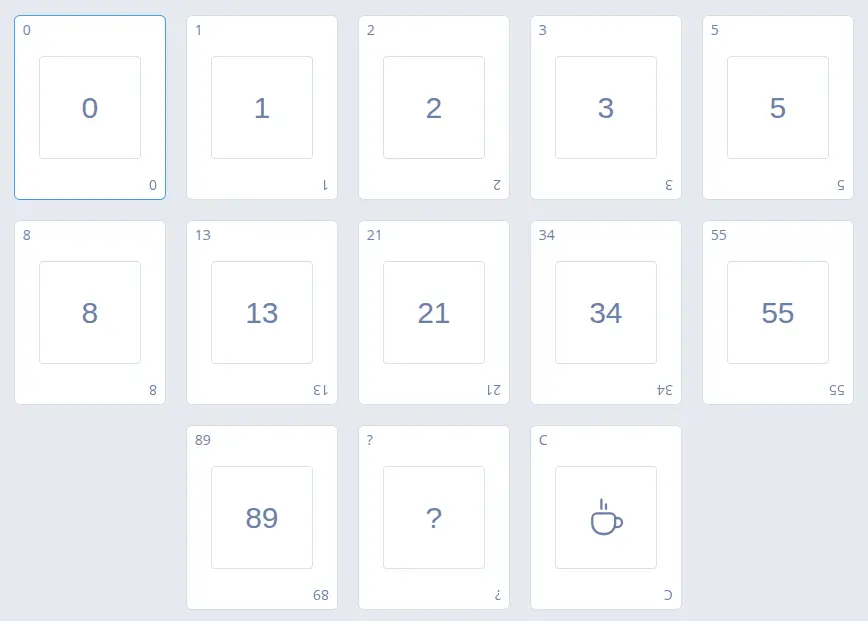
La secuencia de Fibonacci —1, 2, 3, 5, 8, 13, 21, 34…— es la escala más utilizada en Planning Poker por una buena razón: refleja la forma en que funciona la complejidad en la práctica. Las tareas pequeñas son relativamente fáciles de distinguir entre sí, pero la diferencia entre una tarea grande y una muy grande es mucho más difícil de determinar con precisión.
Las crecientes diferencias entre los números de Fibonacci reflejan esta realidad. Obligar a un equipo a elegir entre 13 y 21, en lugar de entre 14 o 15, reconoce la incertidumbre inherente a las estimaciones más amplias y evita la ilusión de una precisión falsa.
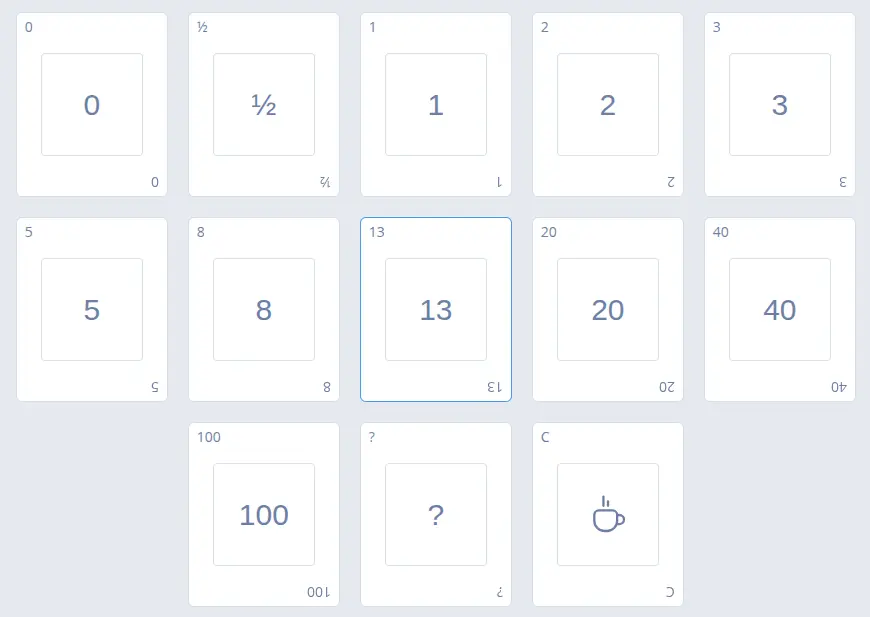
PlanPoker es compatible con Fibonacci de forma nativa, además de otras barajas populares. Los equipos también pueden crear barajas totalmente personalizadas que se adapten a su propio idioma y flujo de trabajo.
Tallas de camiseta
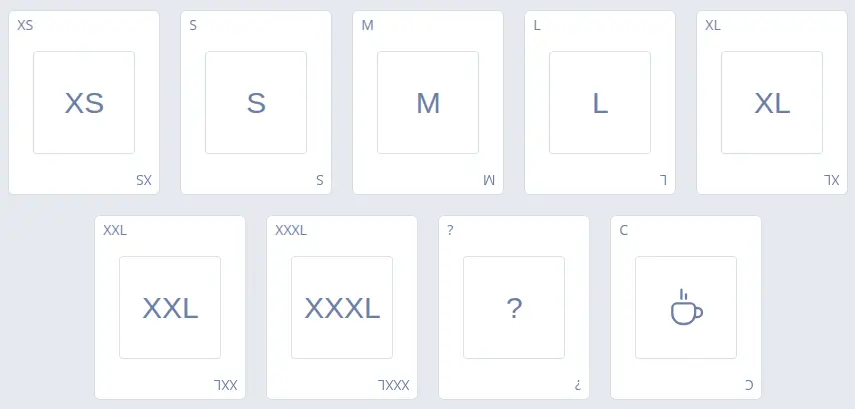
El sistema de tallas de camisetas sustituye los números por etiquetas familiares (XS, S, M, L, XL, XXL), lo que facilita la estimación para los equipos que aún no se sienten cómodos con los puntos de historia, o para la gestión de la cartera de tareas de alto nivel, donde el tamaño relativo importa más que el esfuerzo preciso.
Sin datos numéricos, las conversaciones tienden a centrarse en la complejidad relativa en lugar de desviarse hacia debates sobre el número exacto de horas. Esto hace que el uso de tallas de camisetas sea especialmente útil en las primeras sesiones de planificación, las discusiones sobre la hoja de ruta o las estimaciones entre equipos con partes interesadas no técnicas.
PlanPoker incluye un mazo de tallas de camiseta listo para usar. Sin configuración — solo abre una sala, cambia el mazo y comienza.
Ejecuta mejores sesiones de estimación con PlanPoker
PlanPoker está construido alrededor de estas técnicas. Todo en la aplicación está diseñado para hacer la estimación más rápida, más justa y más útil para tu equipo.
- Mazos Fibonacci, Scrum, tallas de camiseta, secuencial y personalizados
- Revelación simultánea de cartas para evitar el sesgo de anclaje
- Gráficos de distribución de votos para visualizar el consenso
- Importa historias desde Jira — CSV, XML o API en vivo
- Sin registro requerido — inicia una sesión en segundos