Planning Poker
A consensus-based estimation technique that brings every voice into the room.
What is Planning Poker?
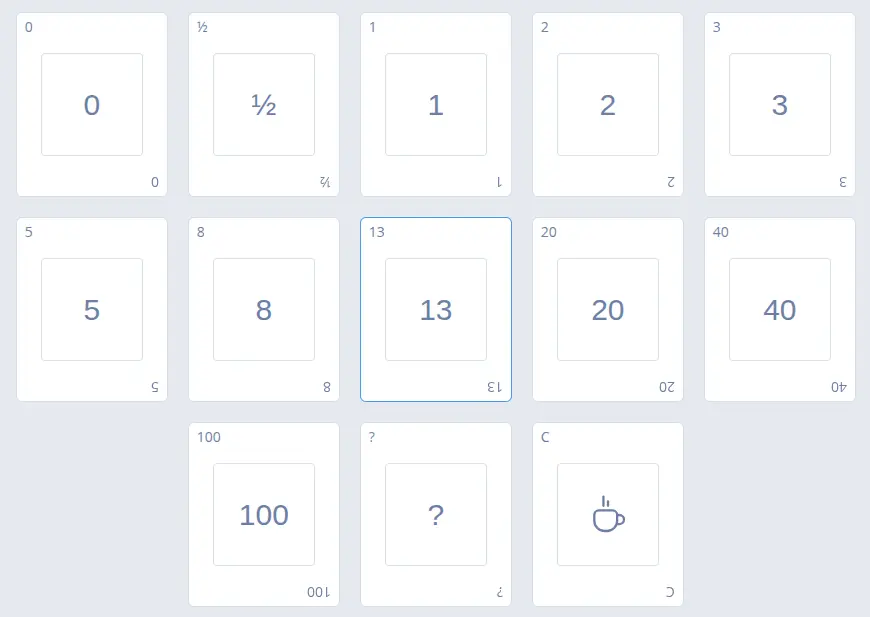
Planning Poker is a structured estimation technique where every team member independently assigns a value to a backlog item, then all values are revealed at the same time. The cards — typically numbered using the Fibonacci sequence — represent the estimated effort or complexity of the task.
The simultaneous reveal is the key. By showing estimates at the same moment, no one is anchored by what others think. Differences in estimates open up a conversation, and through that conversation the team builds a shared understanding of the work.
Why Use Planning Poker?
-
Prevents anchoring bias
Simultaneous reveal means no one sees anyone else's estimate before choosing their own. Early opinions don't skew the result.
-
Surfaces hidden complexity
When estimates diverge widely, the discussion that follows often uncovers assumptions, risks, or dependencies nobody had considered.
-
Builds team ownership
Everyone's vote matters equally. Estimates the team arrives at together are estimates the team stands behind.
-
Drives continuous improvement
Teams that estimate together regularly get better at it over time. Planning Poker sessions build intuition and predictability sprint after sprint.
How to Run a Planning Poker Session
-
1.
Prepare the backlog
Make sure all team members have read the items to be estimated and have a chance to ask clarifying questions before voting starts.
-
2.
Choose a deck
Select the card values your team will use — Fibonacci, Scrum, T-shirt sizes, or a custom deck. Fibonacci is the most common choice for story point estimation.
-
3.
Vote simultaneously
Each team member picks a card privately. When everyone is ready, all cards are revealed at once.
-
4.
Discuss and re-vote if needed
If estimates vary widely, the highest and lowest voters explain their reasoning. The team discusses, then votes again. Repeat until consensus is reached.
-
5.
Record the final estimate and move on
Once the team agrees on a value, set the estimate and move to the next item. Speed matters — keep discussions focused.
Run Planning Poker with PlanPoker
PlanPoker is built around the Planning Poker technique. Everything in the app supports faster, fairer estimation sessions.
- Simultaneous card reveal to prevent anchoring bias
- Fibonacci, Scrum, T-shirt, Sequential, and custom decks
- Vote distribution charts to visualise consensus
- Import stories from Jira — CSV, XML, or live API
- No sign-up required — start a session in seconds