Agile Estimation Techniques
Understand the most effective ways to estimate work in agile teams.

In agile development, estimation is more than just assigning numbers — it is about building shared understanding across the team. A good estimate is a conversation starter, not a commitment set in stone. Agile estimation techniques give teams a structured way to discuss the effort and complexity of work, surface hidden risks, and align on priorities before a single line of code is written.
Planning Poker
Planning Poker brings every perspective in the room into the estimation process. Each team member independently selects a card representing their effort estimate, then all cards are revealed simultaneously. This prevents anchoring — the tendency for early opinions to pull everyone else's estimate along — and instead surfaces the full range of thinking on the team.
When estimates differ significantly, the team discusses the reasons. This is where Planning Poker earns its value: the conversation reveals assumptions, uncovers hidden complexity, and builds a shared mental model of the work. Rounds continue until the team reaches consensus.
The result is an estimate everyone understands and owns — not a number handed down from above, but one the whole team arrived at together.
The Fibonacci Sequence
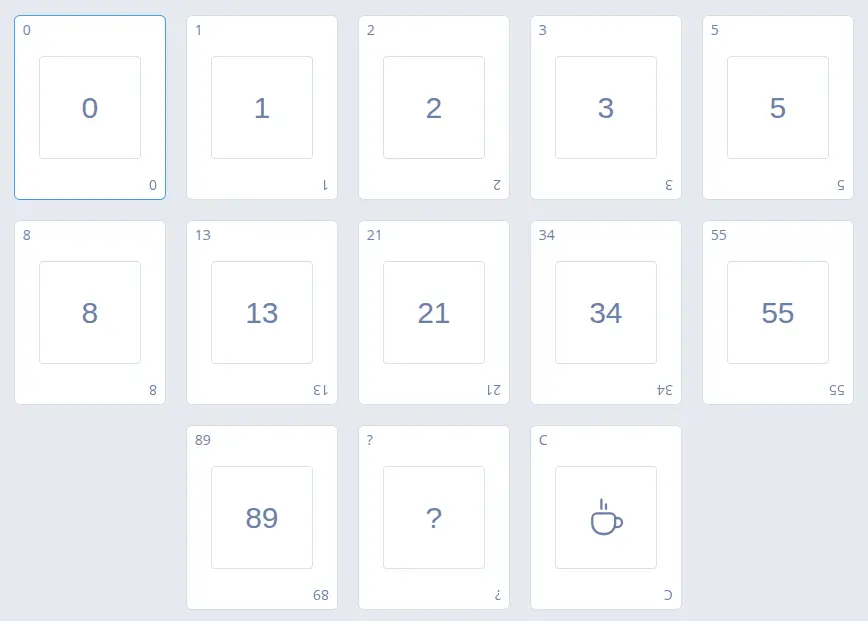
The Fibonacci sequence — 1, 2, 3, 5, 8, 13, 21, 34… — is the most widely used scale in Planning Poker for a good reason: it mirrors the way complexity actually works. Small tasks are relatively easy to distinguish from each other, but the difference between a large task and a very large task is much harder to pin down precisely.
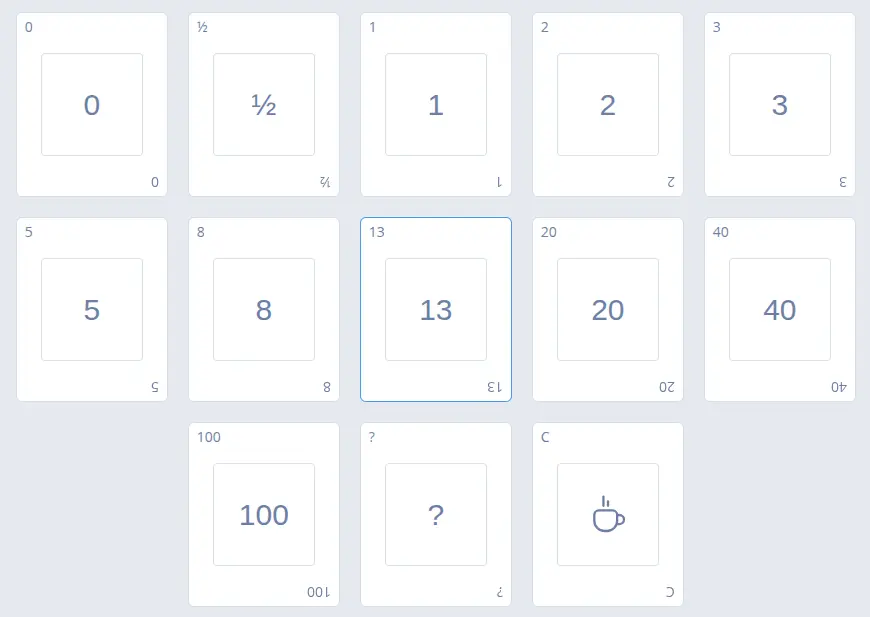
The growing gaps between Fibonacci numbers reflect this reality. Forcing a team to choose between 13 and 21 rather than 14 or 15 acknowledges the inherent uncertainty in larger estimates and prevents the illusion of false precision.
PlanPoker supports Fibonacci out of the box alongside other popular decks. Teams can also build fully custom decks to match their own language and workflow.
T-Shirt Sizing
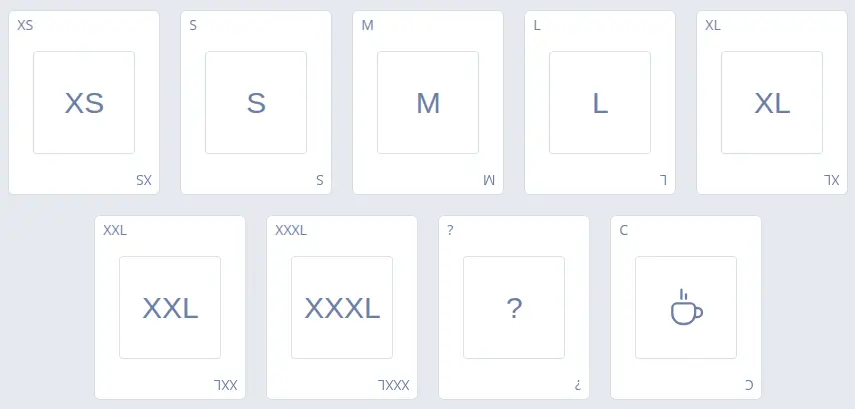
T-shirt sizing replaces numbers with familiar labels — XS, S, M, L, XL, XXL — making estimation more approachable for teams that aren't yet comfortable with story points, or for high-level backlog grooming where relative size matters more than precise effort.
Without numbers in the room, conversations tend to stay focused on relative complexity rather than drifting into debates about exact hour counts. This makes T-shirt sizing particularly useful in early planning sessions, roadmap discussions, or cross-team estimation with non-technical stakeholders.
PlanPoker includes a T-shirt sizing deck ready to use. No setup — just open a room, switch the deck, and start.
Run Better Estimation Sessions with PlanPoker
PlanPoker is built around these techniques. Everything in the app is designed to make estimation faster, fairer, and more useful for your team.
- Fibonacci, Scrum, T-shirt, Sequential, and custom decks
- Simultaneous card reveal to prevent anchoring bias
- Vote distribution charts to visualise consensus
- Import stories from Jira — CSV, XML, or live API
- No sign-up required — start a session in seconds